
Categories
Chicago Suburbs, NapervillePublished June 10, 2026
How an Abandoned Quarry Became Naperville’s Favorite Summer Tradition

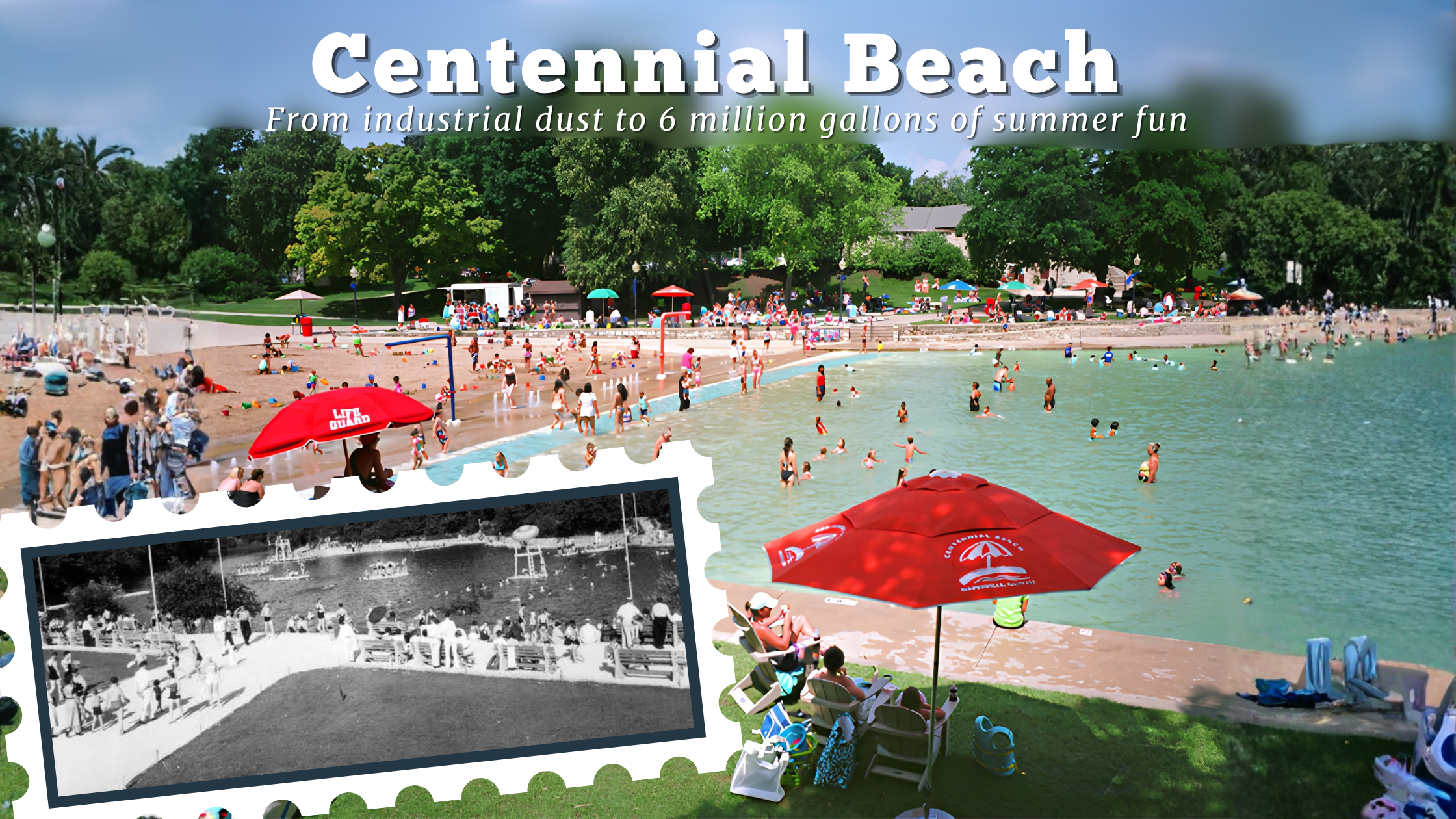
From Industrial Quarry to Community Jewel: The History of Naperville’s Centennial Beach
If you’ve ever spent a sticky July afternoon in Naperville, Illinois, chances are you’ve sought refuge in the cool waters of Centennial Beach. It’s not quite a pool, and it's not quite a lake. Holding a massive 6.2 million gallons of chlorinated, natural spring water, "The Beach" is an architectural and cultural marvel that has defined local summers for nearly a century.
But long before it was a paradise for sunbathers and high-divers, this beloved landmark was a noisy, dusty hub of heavy industry.
The Quarry Days (1833–1913)
The story of Centennial Beach actually begins with Naperville’s very origins. In 1833, a settler named George Martin began digging for limestone on the western edge of the young town.
For decades, quarrying stone was Naperville’s chief industry. The high-quality limestone excavated from this site was used to build foundations for homes and commercial buildings all over town—much of which you can still see today.
Because the site sat right next to the West Branch of the DuPage River, pure natural springs constantly leaked into the pits. To keep the quarry dry enough for workers to harvest stone, massive steam pumps had to run 24/7. Finally, in 1913, the battle against the water was lost. The pumps were turned off, the natural springs broke through completely, and the abandoned quarries quickly filled to the brim with crystal-clear water.
Born Out of the Great Depression
For nearly two decades, the twin deep craters sat unused. Then came 1931, the year Naperville was set to celebrate its 100th birthday.
Despite the economic devastation of the Great Depression, local leaders saw an opportunity to create something permanent to honor the city’s centennial. Judge Win Knoch proposed purchasing the 45-acre parcel containing the old quarries.
To fund it, 33 civic-minded residents stepped up, each contributing $500 out of their own pockets to raise the $16,500 purchase price.
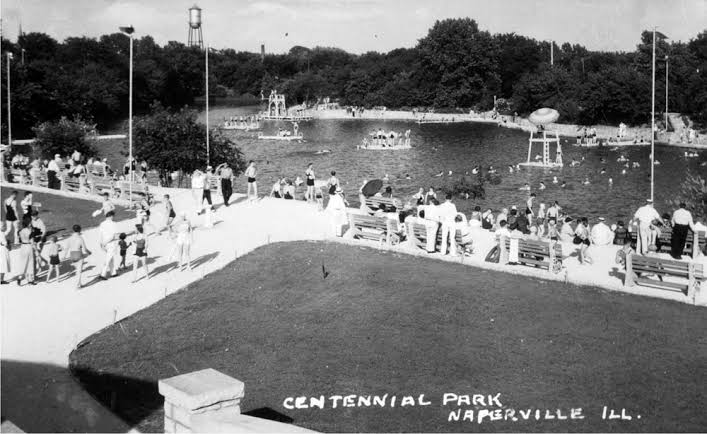
Centennial Beach shortly after opening in the 1930s. Source: Naperville
In 1932, development began with help from the federal Works Progress Administration (WPA). Workers used limestone taken directly from the quarry's western edge to construct the iconic stone bathhouse, which was completed in 1934.
When it first opened, Naperville residents swam for free, while out-of-towners paid just 10 cents for kids and 35 cents for adults. It was an instant hit, bringing in over $6,000 in its very first year—money that helped fund other vital city projects during the Depression.
The "Save the Beach" Era
By the late 1960s, decades of heavy use had taken a toll. The City of Naperville handed control over to the newly formed Naperville Park District in 1969. At the time, the facility had deteriorated so badly that officials actually considered shutting down swimming entirely, opting to turn it into a quiet park for boating and fishing instead.
The community wasn't having it. Local citizens rallied together to form the "Save the Beach Committee" in 1970, successfully petitioning to preserve their historic swimming hole.
Instead of closing, Centennial Beach underwent massive renovations over the next decade. An advanced, continuous water-recirculation system was installed, concrete decks were poured, and the diving complexes were brought up to modern safety standards.
Did You Know? The Great Flood of 1996
In July 1996, a historic storm dumped over 17 inches of rain on the region. The DuPage River overflowed, completely submerging Centennial Beach until the water level reached the top of the high-dive platform! It took more than two weeks of pumping, scrubbing, and refilling to get the Beach back open.
Centennial Beach Today
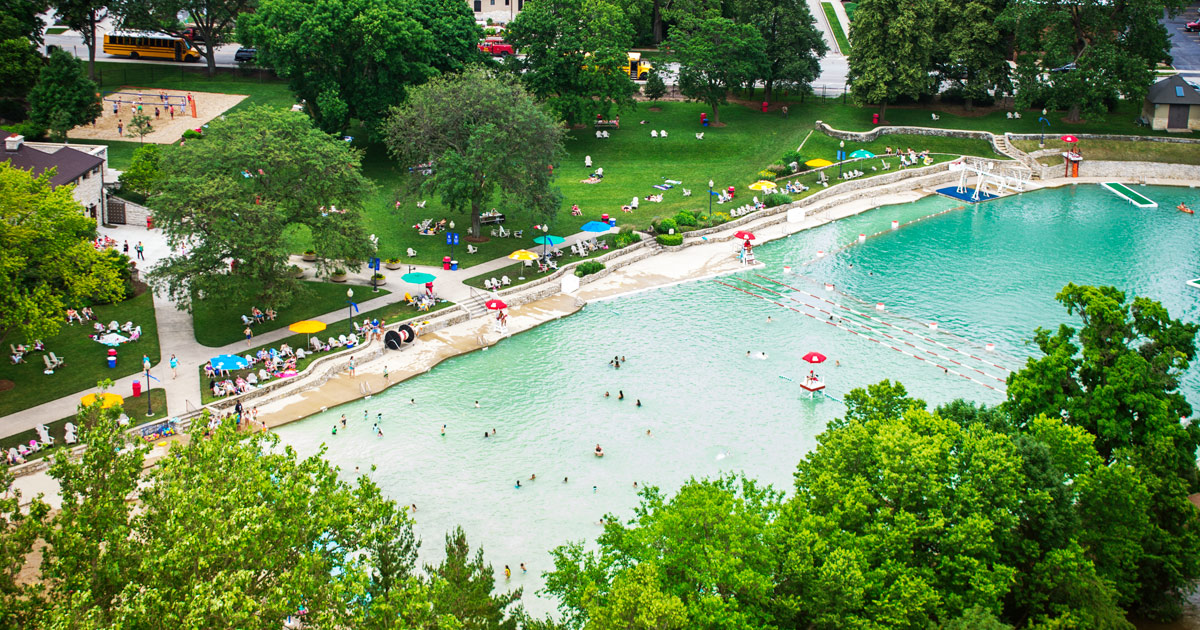
Photo from VisitNaperville.com
Today, Centennial Beach looks a bit different than it did in 1932, but its historic soul remains intact. It features a modern zero-depth entry (just like a real ocean beach) that slopes down to a staggering depth of 15 feet in the diving well.
Unlike standard neighborhood pools, the water is completely unheated, meaning a dip in early June offers a wonderfully brisk awakening, while the water naturally warms up under the July and August sun.
As Naperville looks toward its upcoming bicentennial, Centennial Beach stands as a living monument to community spirit, a place born from a dusty stone quarry that still provides the ultimate summer escape for generations of families.
TIP: Check out the "Adult Swim" times for some peaceful exercise or a relaxing float.
Website: https://napervilleparks.org/centennialbeach

Kristen Jungles
| Jungles Group | LPT Realty
or another way